
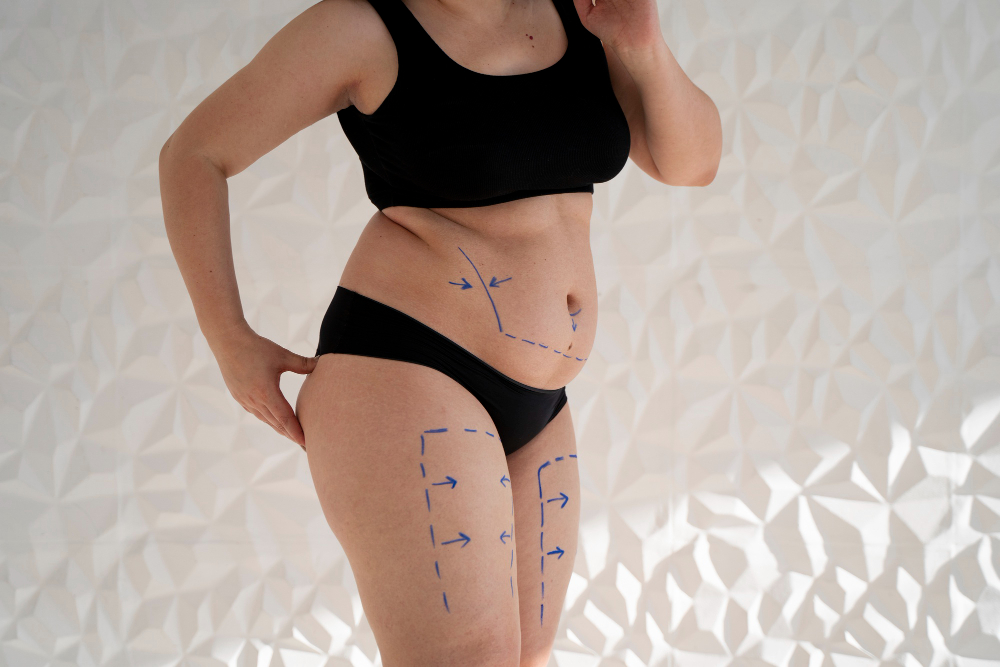
For many patients, liposuction is worth it when the goal is to remove stubborn fat that does not respond to diet and exercise. It can improve body shape, enhance proportions, and create more defined contours.
Liposuction is not a weight loss procedure. It works best for patients who are near a stable weight, have good skin elasticity, and want targeted fat reduction in areas such as the abdomen, flanks, thighs, arms, back, or chin.
At Shape U Deserve, patients receive a personalized consultation with Dr. Ashu Garg, an experienced Beverly Hills cosmetic surgeon specializing in aesthetic body contouring procedures, to determine whether liposuction is the right option for their goals.
What Is Liposuction?
Liposuction is a cosmetic surgical procedure that removes unwanted fat from specific areas of the body. It is commonly used to contour areas that hold on to fat despite healthy eating and regular exercise.
Common treatment areas include:
- Abdomen
- Waist and flanks
- Hips
- Thighs
- Upper arms
- Back
- Bra roll area
- Chest
- Neck and chin
During the procedure, small incisions are made near the treatment area. A thin tube called a cannula is inserted to loosen and remove fat using suction.
According to MedlinePlus, liposuction is designed to remove fat deposits and improve body contour, not to treat obesity or replace healthy lifestyle habits.
Is Liposuction Worth It for Body Contouring?
Liposuction may be worth it for patients who want visible improvement in body shape without needing a larger procedure. It can create a slimmer, more balanced look by removing fat from specific areas.
Patients often consider liposuction when:
- Exercise has not changed certain areas
- Clothing fits poorly due to localized fat
- The waistline lacks definition
- The body looks uneven or disproportionate
- Stubborn fat affects confidence
- A more sculpted shape is desired
The biggest value of liposuction is precision. Unlike general weight loss, which reduces fat throughout the body, liposuction targets selected areas. This makes it useful for refining body proportions.
For patients in Southern California considering liposuction beverly hills, consultation with a qualified cosmetic surgeon is the best way to understand what results are realistic.
What Liposuction Can Improve
Liposuction can improve body contours by removing fat from problem areas. The treatment can help create smoother lines and better definition.
Liposuction can help with:
- A fuller lower abdomen
- Love handles
- Fat around the waist
- Inner and outer thigh fullness
- Upper arm fat
- Back rolls
- Double chin
- Fat pockets after weight loss
- Uneven body proportions
For many patients, liposuction results make the body look more aligned with their actual fitness level.
What Liposuction Cannot Do?
Liposuction is effective, but it has limits. It is important to understand what the procedure cannot correct.
Liposuction does not:
- Remove large amounts of weight
- Tighten significant loose skin
- Treat cellulite
- Replace diet and exercise
- Stop future weight gain
- Correct muscle separation
- Treat obesity
Patients with loose skin may need a different form of body contouring surgery, such as a tummy tuck, arm lift, thigh lift, or body lift. In some cases, liposuction can be combined with another procedure for a more complete result.
The U.S. Food and Drug Administration provides general information about cosmetic and aesthetic medical devices, including safety considerations for body contouring treatments.
Who Is a Good Candidate for Liposuction?
A good candidate for liposuction is usually close to a healthy weight but has localized fat deposits that remain unchanged with lifestyle efforts.
Ideal candidates often have:
- Stable body weight
- Good overall health
- Firm or moderately elastic skin
- Realistic expectations
- Specific areas of unwanted fat
- No uncontrolled medical conditions
- Commitment to maintaining results
Patients should also be non-smokers or willing to stop smoking before and after surgery. Smoking can affect healing and increase the risk of complications.
A consultation helps determine whether liposuction alone is enough or whether another fat removal treatment or surgical approach may provide a better outcome.
Who May Not Be a Good Candidate?
Liposuction may not be recommended for everyone. A surgeon may advise against the procedure if a patient has certain health or skin concerns.
Liposuction may not be right for patients with:
- Significant loose skin
- Poor skin elasticity
- Unstable weight
- Active infection
- Uncontrolled diabetes
- Blood clotting conditions
- Serious heart or lung disease
- Unrealistic expectations
Patients planning major weight loss may be advised to wait until they reach a stable weight before undergoing surgery.
What Are Liposuction Results Like?
Liposuction results are usually noticeable once swelling begins to improve. Early changes may appear within a few weeks, but final results often take several months.
Typical timeline:
- First week: Swelling, bruising, and soreness are common.
- 2 to 4 weeks: Many patients see early contour improvement.
- 6 to 12 weeks: Swelling continues to decrease.
- 3 to 6 months: Results become more refined.
- Up to 12 months: Final contour may fully settle.
Results vary based on treatment area, amount of fat removed, skin quality, and healing response.
Liposuction can permanently remove fat cells from treated areas. However, remaining fat cells can still enlarge with weight gain. Maintaining a stable weight helps preserve the result.
Does Liposuction Leave Scars?
Liposuction uses small incisions, so scars are typically minimal. Incisions are often placed in discreet areas when possible.
Scar visibility depends on:
- Skin type
- Healing ability
- Incision location
- Post-surgical care
- Sun protection
- Genetics
Most scars fade over time and become less noticeable.
How Painful Is Liposuction?
Liposuction is performed with anesthesia, so patients should not feel pain during surgery. After the procedure, soreness, swelling, bruising, and tightness are expected.
Many patients describe the recovery as feeling similar to deep muscle soreness. Discomfort is usually strongest during the first few days and improves gradually.
Pain control instructions are provided after surgery. Patients are often asked to wear a compression garment to reduce swelling and support the new contour.
What Is Recovery Like After Liposuction?
Recovery depends on the number of areas treated, the technique used, and the patient’s overall health.
Common recovery expectations:
- Compression garment use for several weeks
- Mild to moderate swelling
- Bruising around treated areas
- Temporary numbness or sensitivity
- Limited activity during early healing
- Gradual return to normal routines
Most patients return to desk work within several days to one week. More active jobs may require additional recovery time.
Exercise is usually paused for a few weeks. Dr. Garg provides personalized recovery instructions based on the procedure and healing progress.
Are Liposuction Results Permanent?
Liposuction removes fat cells from the treated area. Those removed fat cells do not grow back.
However, liposuction does not prevent future weight gain. If a patient gains weight after surgery, remaining fat cells can expand. This may affect treated and untreated areas.
To maintain results, patients should focus on:
- Stable weight
- Regular exercise
- Balanced nutrition
- Hydration
- Consistent sleep
- Long-term lifestyle habits
The best liposuction results come from pairing surgery with healthy maintenance.
Liposuction vs Weight Loss: What Is the Difference?
Liposuction and weight loss are not the same. Weight loss reduces fat throughout the body. Liposuction removes fat from targeted areas to improve shape.
A patient may lose weight and still have stubborn fat in certain areas. Liposuction can address those resistant pockets, but it should not be used as a substitute for weight management.
Simple comparison:
| Goal | Best Option |
| Lose a large amount of weight | Diet, exercise, medical weight loss, or bariatric care |
| Remove stubborn fat pockets | Liposuction |
| Tighten loose abdominal skin | Tummy tuck |
| Improve full body shape after weight loss | Body contouring surgery |
| Treat mild fat without surgery | Non-surgical fat reduction may be considered |
Liposuction vs Tummy Tuck
Liposuction removes fat. A tummy tuck removes loose skin and can repair separated abdominal muscles.
A tummy tuck may be better for patients with:
- Loose abdominal skin
- Hanging skin after pregnancy
- Muscle separation
- Stretch-marked lower belly skin
- A weakened abdominal wall
Liposuction may be better for patients with:
- Good skin elasticity
- Localized fat
- No major skin laxity
- Desire for smaller scars
- Targeted contouring goals
Some patients benefit from combining both procedures.
Liposuction vs Non-Surgical Fat Reduction
Non-surgical fat reduction treatments can help reduce small pockets of fat, but results are usually more subtle than liposuction.
Liposuction may be preferred when patients want:
- More dramatic fat reduction
- One surgical session
- Precise contouring
- Faster visible shaping
- Treatment of multiple areas
Non-surgical options may be preferred for patients who:
- Want no surgery
- Have very small fat pockets
- Cannot take downtime
- Prefer gradual changes
A consultation helps match the treatment to the patient’s goals.
What Are the Risks of Liposuction?
Like any surgery, liposuction has risks. Choosing an experienced cosmetic surgeon can help reduce complications, but risks cannot be eliminated.
Possible risks include:
- Bleeding
- Infection
- Bruising
- Swelling
- Fluid buildup
- Numbness
- Uneven contour
- Skin irregularities
- Poor scarring
- Changes in sensation
- Anesthesia-related risks
Patients should disclose medical history, medications, supplements, and prior surgeries during consultation. This allows the surgical team to plan safely.
How Much Fat Can Be Removed with Liposuction?
The amount of fat removed depends on patient safety, body size, treatment area, and surgical plan.
Liposuction is not about removing the largest possible amount of fat. The goal is to create a natural, balanced contour while keeping the procedure safe.
Removing too much fat can increase risks and may lead to uneven results.
How Much Does Liposuction Cost?
Liposuction cost varies based on several factors.
Pricing may depend on:
- Number of areas treated
- Amount of fat removed
- Type of anesthesia
- Surgical facility fees
- Complexity of the procedure
- Whether procedures are combined
- Surgeon experience
- Post-operative garments and follow-up care
A personalized quote is provided after consultation. At Shape U Deserve, pricing is discussed clearly so patients understand what is included.
Is Liposuction Worth the Cost?
Liposuction can be worth the cost when the patient is a good candidate and has realistic expectations. The procedure can provide long-lasting improvement that diet and exercise may not achieve in targeted areas.
Patients often find value in:
- Better body proportions
- Improved clothing fit
- More confidence
- Long-term fat reduction in treated areas
- A more defined waistline or body shape
- Results that can be maintained with stable weight
The decision should be based on personal goals, anatomy, safety, and the expected outcome.
How to Get the Best Liposuction Results
The best results start before surgery and continue through recovery.
Patients can improve outcomes by:
- Choosing a qualified surgeon
- Maintaining a stable weight before surgery
- Following all pre-op instructions
- Avoiding smoking
- Wearing compression garments as directed
- Attending follow-up appointments
- Avoiding strenuous exercise until cleared
- Eating a balanced diet after surgery
- Staying active once approved
Liposuction is a body contouring tool. Long-term results depend on both surgical technique and patient habits.
Conclusion
So, is liposuction worth it? For the right patient, yes. Liposuction can be a strong option for targeted fat removal, improved body shape, and long-lasting contour improvement. It works best when the goal is sculpting, not major weight loss.
Patients considering liposuction should choose an experienced surgeon, understand the recovery process, and have realistic expectations about results.
To find out whether liposuction is the right body contouring option, schedule a private consultation with Dr. Ashu Garg at Shape U Deserve in Beverly Hills. Call +1 424-666-1260 or request a consultation online to start a customized treatment plan.
Frequently Asked Questions
Is liposuction worth it for belly fat?
Liposuction may be worth it for belly fat if the issue is localized fat and the skin has enough elasticity to contract after treatment. If there is loose skin or muscle separation, a tummy tuck may be a better option.
How long do liposuction results last?
Liposuction results can last for many years when weight remains stable. Removed fat cells do not return, but remaining fat cells can grow with weight gain.
Can liposuction help with weight loss?
Liposuction is not a weight loss procedure. It is best for shaping specific areas after a patient is already near a stable weight.
How soon will results show?
Early results may appear within a few weeks. Final results often take 3 to 6 months as swelling resolves.
Can fat come back after liposuction?
The removed fat cells do not grow back. However, weight gain can enlarge remaining fat cells in treated and untreated areas.
Is liposuction safe?
Liposuction is generally safe for properly selected patients when performed by a qualified surgeon in an appropriate setting. As with all surgery, it carries risks that should be reviewed during consultation.
Is liposuction better than non-surgical fat reduction?
Liposuction usually provides more noticeable and precise fat removal. Non-surgical treatments may be better for patients who want mild improvement without downtime.
Can liposuction tighten skin?
Liposuction may allow mild skin contraction, but it does not remove significant loose skin. Patients with skin laxity may need a lift procedure or tummy tuck.